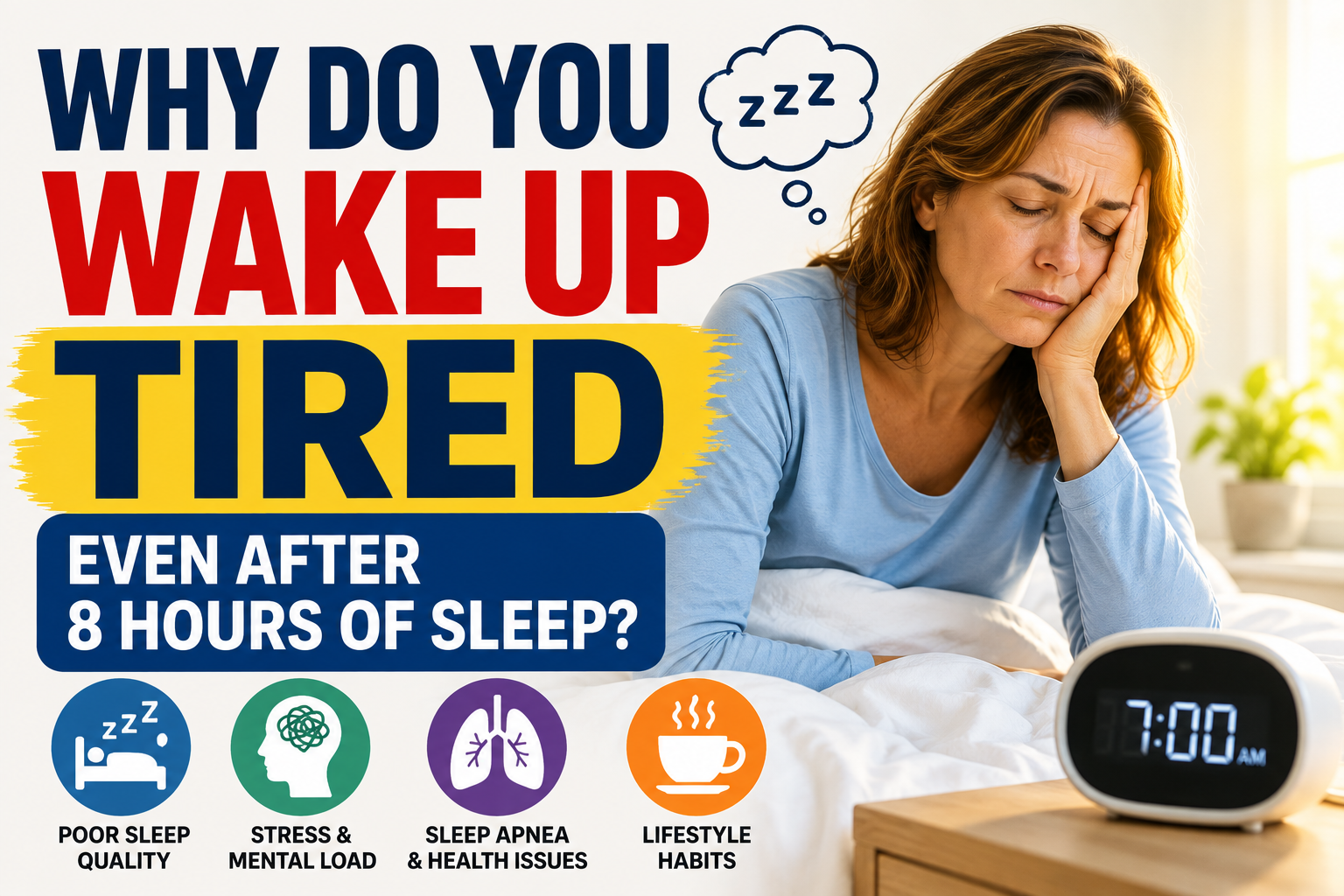
You went to bed at a reasonable time, slept for nearly eight hours, and expected to wake up feeling refreshed. Instead, you opened your eyes and felt like you had barely slept.
If this sounds familiar, you are not alone. Many adults experience waking up tired even after getting enough hours of sleep. The problem is that sleep duration is only one part of healthy sleep. The quality and continuity of your sleep also matter.
As we get older, changes in sleep patterns can become more noticeable. Older adults may sleep more lightly, wake up more often during the night, and experience changes in their usual sleep schedule. The National Institute on Aging notes that adults generally need about 7 to 9 hours of sleep, but several factors can interfere with getting restorative sleep.
So why do you wake up tired after eight hours of sleep? Here are some of the most common possibilities.
1. Eight Hours of Sleep Does Not Always Mean Eight Hours of Good Sleep
The first thing to consider is sleep quality.
You might spend eight hours in bed but wake up repeatedly without fully remembering it. Even brief awakenings can interfere with continuous, restorative sleep.
Your sleep can also be affected by your bedroom environment, an inconsistent bedtime, late-night screen use, caffeine, alcohol, or large meals close to bedtime.
The National Institute on Aging recommends maintaining a regular sleep schedule, avoiding late-day naps, keeping the bedroom comfortable and quiet, exercising regularly, and avoiding alcohol, caffeine, and large meals late in the day.
In other words, the question is not simply:
“How many hours did I sleep?”
It is also:
“How well did I sleep?”
2. Your Sleep Pattern May Change With Age
Getting older does not necessarily mean that you need less sleep.
According to the National Institute on Aging, older adults generally still need around 7 to 9 hours of sleep. However, aging can change when and how you sleep. You may become more likely to go to bed earlier, wake up earlier, or wake more frequently during the night. Sleep can also become lighter.
This can create an interesting situation: you may spend enough time in bed but still feel that your sleep was not as refreshing as it used to be.
That does not automatically mean something is wrong. However, a persistent change in your sleep or daytime energy is worth paying attention to.
3. Stress Can Follow You Into the Night
Your body may be resting while your mind is still working.
Work responsibilities, financial concerns, family issues, or other sources of stress can make it harder to get restorative sleep. Stress and emotional difficulties can also contribute to fatigue during the day.
The NIA notes that anxiety, depression, grief, and personal or financial stress can all contribute to fatigue. Regular physical activity may help improve sleep and reduce feelings of stress and depression.
If you wake up tired and immediately start thinking about everything you need to do that day, your sleep quality may be worth examining alongside your daily stress level.
4. Your Evening Habits May Be Affecting Your Morning Energy
Some everyday habits can quietly interfere with sleep.
For example, drinking coffee late in the day may make it harder to get good-quality sleep. Alcohol can also affect sleep and may interact with certain medications.
Long naps late in the afternoon or evening can make it harder to fall asleep at night. The NIA recommends avoiding long naps, particularly later in the day, when trying to reduce fatigue.
Try looking at your routine as a whole rather than focusing on one specific habit.
Ask yourself:
- What time do I usually drink my last coffee?
- Do I drink alcohol in the evening?
- Do I use my phone or watch TV in bed?
- Do I take long afternoon naps?
- Do I go to bed and wake up at different times every day?
Small changes can sometimes make a noticeable difference.
5. Sleep Apnea Could Be Affecting Your Sleep
One less obvious reason for waking up tired is sleep apnea.
Sleep apnea is a sleep disorder in which breathing repeatedly stops and starts during sleep. According to the National Heart, Lung, and Blood Institute, symptoms can include loud snoring, gasping for air during sleep, daytime sleepiness, tiredness, dry mouth, morning headaches, and frequently waking up to urinate.
One tricky part is that you may not realize that your breathing is being interrupted. Someone sleeping next to you may notice loud snoring, pauses in breathing, or gasping before you do.
If you regularly wake up exhausted despite getting enough sleep, especially if you snore loudly or experience significant daytime sleepiness, it is reasonable to discuss these symptoms with a healthcare professional. A sleep study may be recommended when sleep apnea is suspected.
6. Fatigue Is Not Always a Sleep Problem
Sometimes the reason you wake up tired has less to do with your bedtime routine and more to do with your overall health.
The National Institute on Aging lists several conditions that can contribute to fatigue, including anemia, diabetes, heart disease, kidney disease, thyroid disease, chronic obstructive pulmonary disease, infections, and sleep disorders. Certain medications can also contribute to tiredness.
This does not mean that waking up tired automatically indicates a medical condition.
It simply means that persistent fatigue should not always be dismissed as “just getting older.”
If you have been experiencing unexplained tiredness or low energy for several weeks without improvement, the NIA recommends talking with a healthcare provider.
7. What Can You Do If You Keep Waking Up Tired?
Before assuming that you need a special supplement or complicated sleep product, start with the basics.
Try these simple habits consistently:
Keep a regular sleep schedule
Go to bed and wake up at approximately the same time each day.
Create a relaxing bedtime routine
Give yourself time to wind down before going to sleep instead of moving directly from work or stressful activities into bed.
Pay attention to caffeine
If you drink coffee, tea, or other caffeinated beverages later in the day, consider whether they could be affecting your sleep.
Limit late-day naps
A long nap in the late afternoon can make nighttime sleep more difficult.
Exercise regularly
Regular physical activity can support sleep, energy, and overall well-being. However, if you have health concerns or are starting a new exercise program, discuss appropriate activity with your healthcare provider.
Make your bedroom sleep-friendly
A quiet, comfortable, and appropriately cool bedroom can make it easier to maintain good sleep habits.
Keep a simple sleep and fatigue diary
Write down when you go to bed, when you wake up, whether you woke during the night, how much caffeine or alcohol you had, and how tired you felt during the day.
After a couple of weeks, you may begin to notice patterns.
When Should You Talk to a Doctor?
Occasionally waking up tired is normal. A stressful week, poor sleep schedule, travel, or a late night can temporarily affect your energy.
The situation is different when fatigue becomes persistent.
Consider speaking with a healthcare professional if you have been unusually tired for several weeks, if your daytime sleepiness interferes with daily activities, or if you have symptoms such as loud snoring, gasping during sleep, repeated nighttime awakenings, or other unexplained changes in your health.
The goal is not to assume that something is wrong. It is to find out what may be contributing to the problem.
The Bottom Line
If you wake up tired even after eight hours of sleep, the number of hours you spent in bed may not tell the whole story.
Sleep quality, aging-related changes in sleep, stress, caffeine, alcohol, irregular schedules, sleep apnea, medications, and underlying health conditions can all play a role.
Instead of simply trying to sleep longer, start by asking a better question:
“What might be preventing me from getting restorative sleep?”
Pay attention to your sleep habits, look for patterns, and take persistent fatigue seriously. Getting older does not automatically mean that you have to feel tired every morning. Healthy sleep remains an important part of healthy aging.
Medical Disclaimer: This article is for general informational purposes only and is not a substitute for professional medical advice, diagnosis, or treatment. If you have persistent fatigue, concerning symptoms, or questions about your health, speak with a qualified healthcare professional.